Dandelions keep coming back for two reasons. The taproot can regrow after the top is pulled off, and the wind carries seeds into the lawn from elsewhere.
University of California (UC) IPM says hand-pulling is usually ineffective unless it is repeated over a long time, because the crown and even 1-inch pieces of root can grow a new plant.1 So dig out the whole taproot, or spray in fall. Utah State University (USU) Extension says early fall is a good time to spray perennial weeds, because the herbicide moves down to the roots then.2
This guide covers how to identify a dandelion, how to dig one out, when and what to spray, and how to keep new ones from starting.
On my lawn in northern Utah, the dandelions I pull with the root don't come back, but new ones keep showing up.
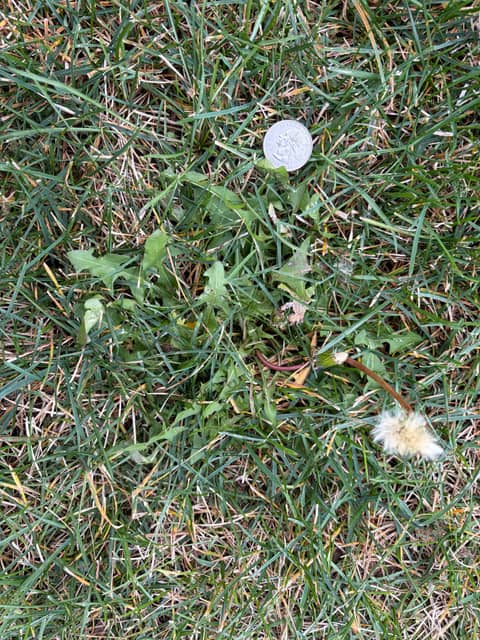
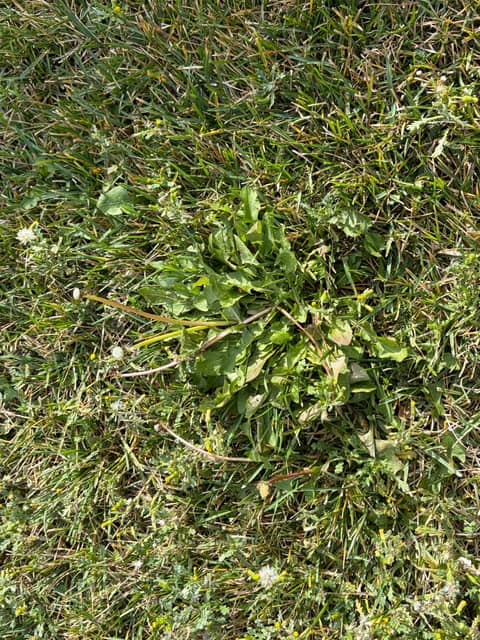
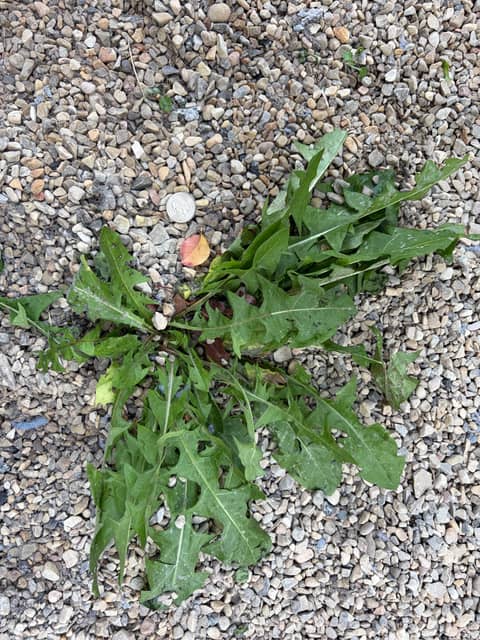
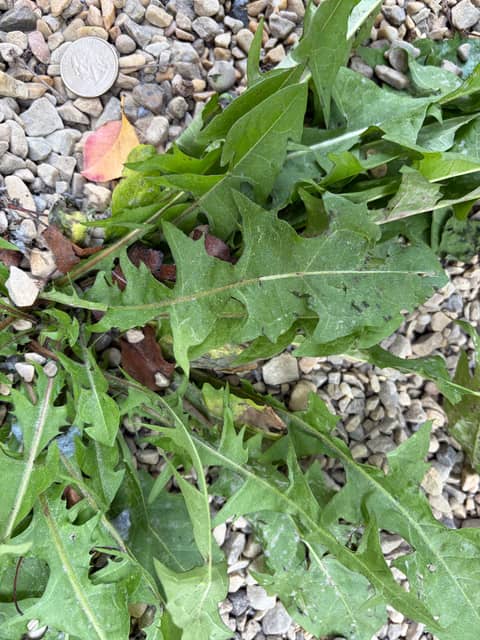
How to identify a dandelion
UC IPM lists these features:3
- Leaves: deeply serrated, in a rosette at the base of the plant.
- Flowers: one yellow head on each hollow, leafless stalk.
- Root: a strong, deep taproot that releases a milky sap when cut.
Why the root matters
UC IPM says new buds sit at the top of the root, so a dandelion can regrow even when it is cut at or below the soil surface. A piece of root about 1 inch long can also grow a new plant.1
Mowing doesn't control dandelions either, because the rosette sits below the mower blade.1
Dig out the taproot
USU suggests digging out minor infestations, including the taproot.2 UC IPM's advice for digging is:1
- Dig out new plants before they set seed.
- A dandelion knife removes the root with less damage to the lawn.
- Watch the spot for several months. If leaves come back, part of the root was left behind.
If you don't have a dandelion knife, a flathead screwdriver can help. It's what I use to dig mine out.
When and what to spray
USU says broadleaf sprays work best in mid to late spring or early fall, and recommends a 3-way or 4-way herbicide for dandelions in early fall.2 A 3-way product combines 2,4-D, dicamba, and mecoprop (MCPP). A USU horticulturist calls early to mid-fall a great time to spray lawn weeds such as dandelions.4
USU gives these limits for selective broadleaf weed killers:2
- Spray between 55°F and 85°F, and not above 85°F.
- Spray when the wind is low. These products can drift and harm trees, shrubs, and garden plants.
- Expect 2 to 3 weeks to see the full effect of a 3-way product.
UC IPM says established plants often survive a spray and are only set back for a while.1 Check for regrowth in spring and treat again if needed. Read and follow the label of whatever product you use.
Keep new ones from starting
Dandelion seeds are carried by wind, and UC IPM says they can travel for miles, so you can't keep every seed out.1 A dense lawn shades the soil, so fewer seedlings get started.1
USU's guide for a lawn that outcompetes weeds:2
- Mow cool-season grass at 2.5 to 4 inches, every 5 to 7 days.
- Keep the mower blade sharp. Dull blades weaken the grass.
- Water deeply and infrequently.
You don't have to remove every dandelion. USU notes that a few can be left, since they are a valuable early-spring plant for bees.2
What happened on my lawn
I usually pull dandelions by hand, using a flathead screwdriver to help dig out the root with the plant. The ones I pull that way don't come back, but new dandelions still show up in my yard.
On May 9, I sprayed the dandelions with Ortho Weed B Gon Lawn Weed Killer Concentrate + Crabgrass Control, which contains 2,4-D, quinclorac, and dicamba. The dandelions I sprayed died.
Sources
Pest Notes: Dandelion, UC Statewide IPM Program, 2018
Weed Control Options for Residential Lawns in Utah, USU Extension, 2015
Dandelion, UC Statewide IPM Program, 2025
Ask an Expert: Five Fall Must-Do Yard Tasks, USU Extension, 2016