By November, the grass has nearly stopped growing, leaves are piling up, and the first hard freezes are close. Leaves left thick on the lawn can shade the grass, and water left in sprinkler pipes can freeze and break them.
Utah State University (USU) Extension says to mow fallen leaves into the lawn while they are about 1 to 2 inches deep or less, and to remove them once they cover the grass.1 Colorado State University (CSU) Extension says water expands as it freezes and can break pipes, valves, and sprinkler heads, so drain or blow out the sprinkler system before winter.2
This guide covers three November jobs: the last mow and fertilizer, fallen leaves, and shutting down the sprinklers. The last section shows my backyard before and after its last mow and fertilizer.
I have a Kentucky bluegrass lawn in northern Utah. I mowed and fertilized the front yard on November 7. I shut off the water to my sprinkler system, which is what I have done every fall for 7 years instead of blowing out the lines. That has worked on my system, but it is not what CSU recommends, and it may not be safe for yours. The sprinkler section explains why.
The last mow and fertilizer
USU says to make the last mow short, about 1.5 to 2 inches, remove the clippings, and then apply a quick-release nitrogen fertilizer.1 The Utah lawn care calendar covers both jobs, the fertilizer rate, and what I did in my front yard.
If your fertilizer needs to be watered in and your sprinklers are already off, use a hose, or turn the system back on for that one watering and shut it off again afterward.
Fallen leaves
USU's fall guide gives two options:1
- Mow them in: if the leaves are about 1 to 2 inches deep or less, mow over them. Make several passes so the shredded pieces filter down between the grass blades. Repeat through the fall as more leaves drop.
- Remove them: if the leaves, or the shredded pieces, cover or shade the grass, remove them. USU suggests moving them to other parts of the landscape, such as flower beds.
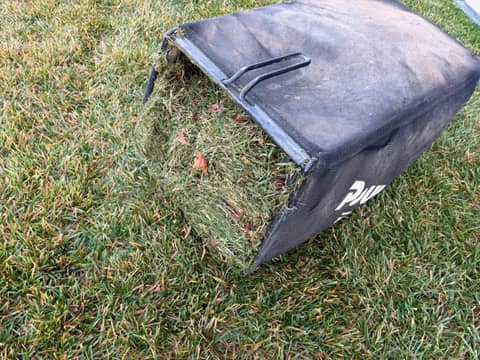
I do one of two things. I rake and bag the leaves, or I mow them up with the bag on the mower. Both remove the leaves instead of mulching them in. On the last mow of the year, the bag also catches the clippings, which USU says to remove on that cut.1
My backyard gets few leaves, from one small tree and from trees in neighboring yards. This year I mowed them up with the bag on during the last mow. The bag was mostly grass clippings.
Shutting down the sprinklers
CSU lists these steps to get a home sprinkler system ready for winter:2
- Shut off the water supply at the valve that feeds the sprinkler system. Don't force the valve.
- Get the water out of the pipes. CSU recommends blowing out each zone with compressed air, like a shop air compressor, at no more than 50 psi for polyethylene pipe or 80 psi for rigid PVC. It does not recommend draining by gravity, because buried pipes can shift and you can't see whether every line drained.
- Protect the backflow preventer, the valve assembly that keeps sprinkler water out of your drinking water. CSU says not to blow compressed air through some common types, because the heat can melt their rubber seals. It gives separate draining steps for each type.
Wear eye protection when blowing out a system.2 If you don't have a compressor or aren't sure which backflow preventer you have, a sprinkler company can do it.
What I do, and why you shouldn't copy it
For 7 years I have shut off the water supply each fall, then turned on each zone valve for a few seconds to let water out. I don't blow out the lines. I haven't had a broken pipe or sprinkler head.
That doesn't mean it is safe for your system. Whether water left in the pipes freezes can depend on how deep the pipes are buried, whether they drain, where the backflow preventer sits, and how cold your winter gets. Those differ from one yard to the next, and I can't check yours. CSU says preparing a system in fall costs far less than repairing freeze damage in spring.2 Follow CSU's steps, or have a sprinkler company winterize your system.
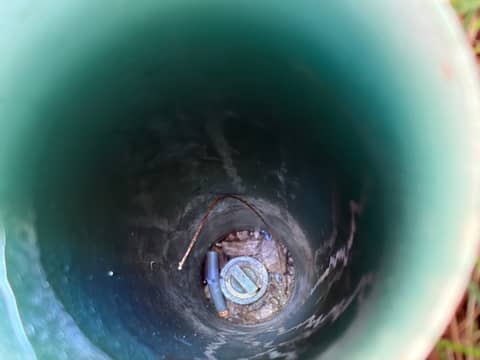
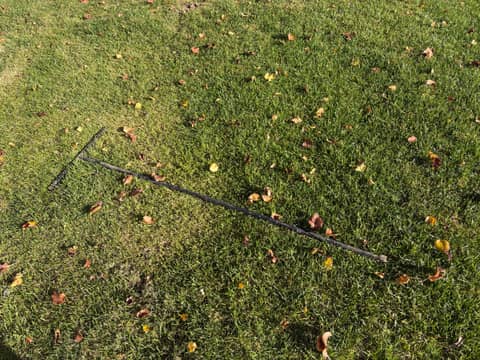
My shutoff valve is buried in the front yard. A capped pipe sticks up out of the lawn, and the valve sits at the bottom of it. I turn it with a long T-handle wrench that reaches down the pipe.
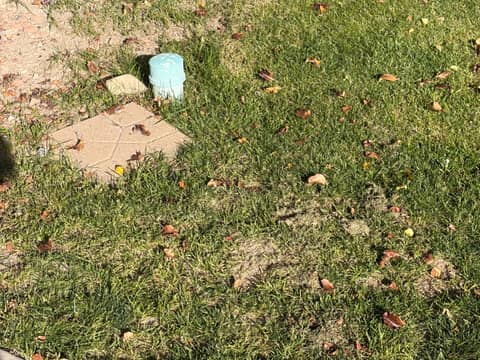
I shut the valve off each year around early November, before temperatures drop below freezing.
What I did in the backyard
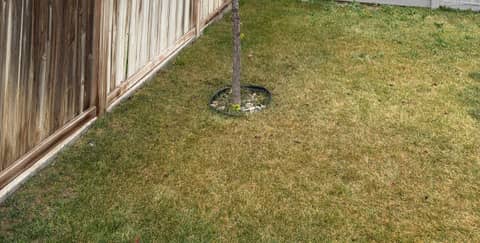
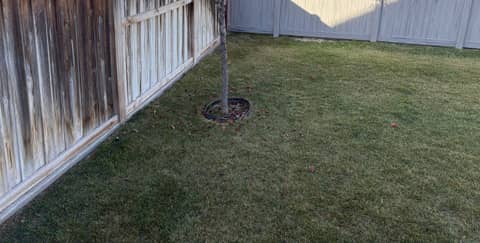
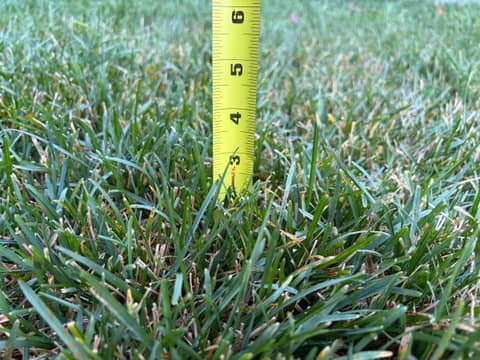
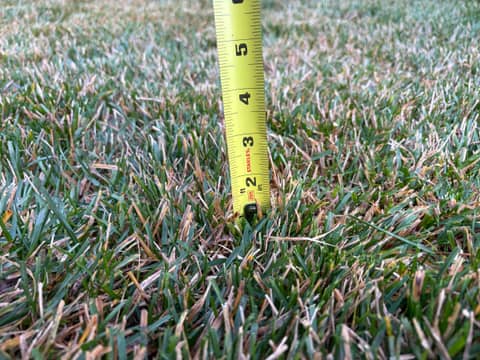
I skipped the backyard on November 7 because the grass was still wet. On November 10, I mowed it from about 3 inches down to about 1.5 inches with the bag on and spread about 6.3 pounds of IFA Fall & Winter Lawn Food (22-2-12) on about 1,259 square feet. That is the bag's rate, 5 pounds per 1,000 square feet. I had already shut off the sprinkler water, so I turned it back on to water in the fertilizer, then shut it off again.
Sources
How Do I Take Care of My Lawn in Utah in the Fall?, USU Extension, 2026
Home Sprinkler Systems: Preparing Your Sprinkler System for Winter, Colorado State University Extension, 2025